Challenges Faced by PhD Students and How to Overcome Them

Pursuing a Ph.D. is an exciting yet demanding journey that tests a student’s resilience, dedication, and ability to manage multiple challenges. While doctoral studies offer the opportunity to become an expert and contribute original knowledge to a field, Ph.D. candidates often face several mental, academic, and practical hurdles that can impede their progress and well-being. Understanding these challenges and adopting effective strategies to overcome them is crucial for a successful and fulfilling Ph.D. experience. Common Challenges Faced by Ph.D. Students 1. Isolation and Loneliness Ph.D. research can be a solitary endeavor, leaving students feeling disconnected from peers and support networks. The lack of regular social interactions can contribute to feelings of loneliness and impact mental health. 2. Time Management Difficulties Balancing research, coursework, teaching responsibilities, and personal life demands strong time management skills. Many Ph.D. students struggle to meet deadlines while maintaining quality in their work. 3. Financial Pressures Limited funding and the competitive nature of securing scholarships or grants cause financial stress for many students, which can distract from their research focus. 4. Supervisor Relationship Issues Disagreements or misalignment with supervisors can create conflict and hinder academic progress, causing frustration and delays. 5. Academic and Publication Pressure Ph.D. candidates are under constant pressure to produce original and publishable research, which can lead to stress, self-doubt, and fear of failure. 6. Mental Health Concerns High levels of stress, anxiety, and symptoms of depression are prevalent among Ph.D. students, exacerbated by imposter syndrome and workload intensity. Strategies to Overcome Ph.D. Challenges Build a Support Network Engage actively with peers, mentors, and supervisors. Attend academic seminars, workshops, and social events to create a community that understands the Ph.D. journey. Develop a Realistic Schedule Use effective time management techniques such as goal-setting, the Pomodoro technique, and prioritizing tasks to maintain balance and productivity. Seek Financial Aid and Opportunities Explore teaching assistantships, research grants, and part-time roles related to your field to ease financial burdens without compromising research. Maintain Open Communication Regularly discuss your expectations and progress with your supervisor. Address conflicts early to find constructive solutions. Focus on Mental Wellness Prioritize self-care, take breaks, and seek professional help if needed. Practice mindfulness, exercise, and hobbies outside of academia to reduce burnout. Embrace Failure as Learning View setbacks as growth opportunities. Consult peers and advisors for feedback and maintain resilience throughout. Why Choose Garden City University for Your Ph.D.? Garden City University (GCU), Bangalore, offers an enriching Ph.D. program designed to cultivate global research skills and knowledge aimed at solving real-world problems through impactful and transdisciplinary research. GCU encourages scholars to engage in research beneficial to society, policymakers, and industry practitioners, with opportunities extending beyond publications to patents and market applications. Ph.D. scholars at GCU benefit from a vibrant academic environment with access to expert supervisors across diverse disciplines including management, life sciences, computational sciences, media studies, psychology, and more. The university’s emphasis on collaboration, innovation, and real-time problem-solving equips students with practical competencies to excel in their careers. By joining GCU, Ph.D. students gain access to academic mentorship, cutting-edge infrastructure, a strong research community, and opportunities for interdisciplinary projects, all within the dynamic and entrepreneurial city of Bangalore. FAQ How can Ph.D. students manage stress effectively? Prioritize self-care, set realistic goals, take breaks, and seek support from peers or professionals to manage stress during the Ph.D. journey. What should I do if I have conflicts with my supervisor? Communicate openly about the issues, seek mediation if necessary, and try to establish clear expectations and goals for your research work. How important is time management in completing a Ph.D.? Extremely important. Efficient time management helps balance research, coursework, and personal life, preventing burnout and ensuring steady progress. Can financial challenges affect a Ph.D. student’s performance? Yes, financial stress can distract from research focus. Exploring scholarships, grants, and assistantships can alleviate financial burdens and support academic success. Why is Garden City University a good choice for pursuing a Ph.D.? GCU offers a supportive research environment with expert faculty, interdisciplinary opportunities, access to resources, and emphasis on impactful, real-world solutions. For those embarking on or continuing their Ph.D. journey, Garden City University, Bangalore, stands out as an excellent institution that fosters academic excellence, innovation, and practical research skills, providing a strong foundation for future success.

future of robotics

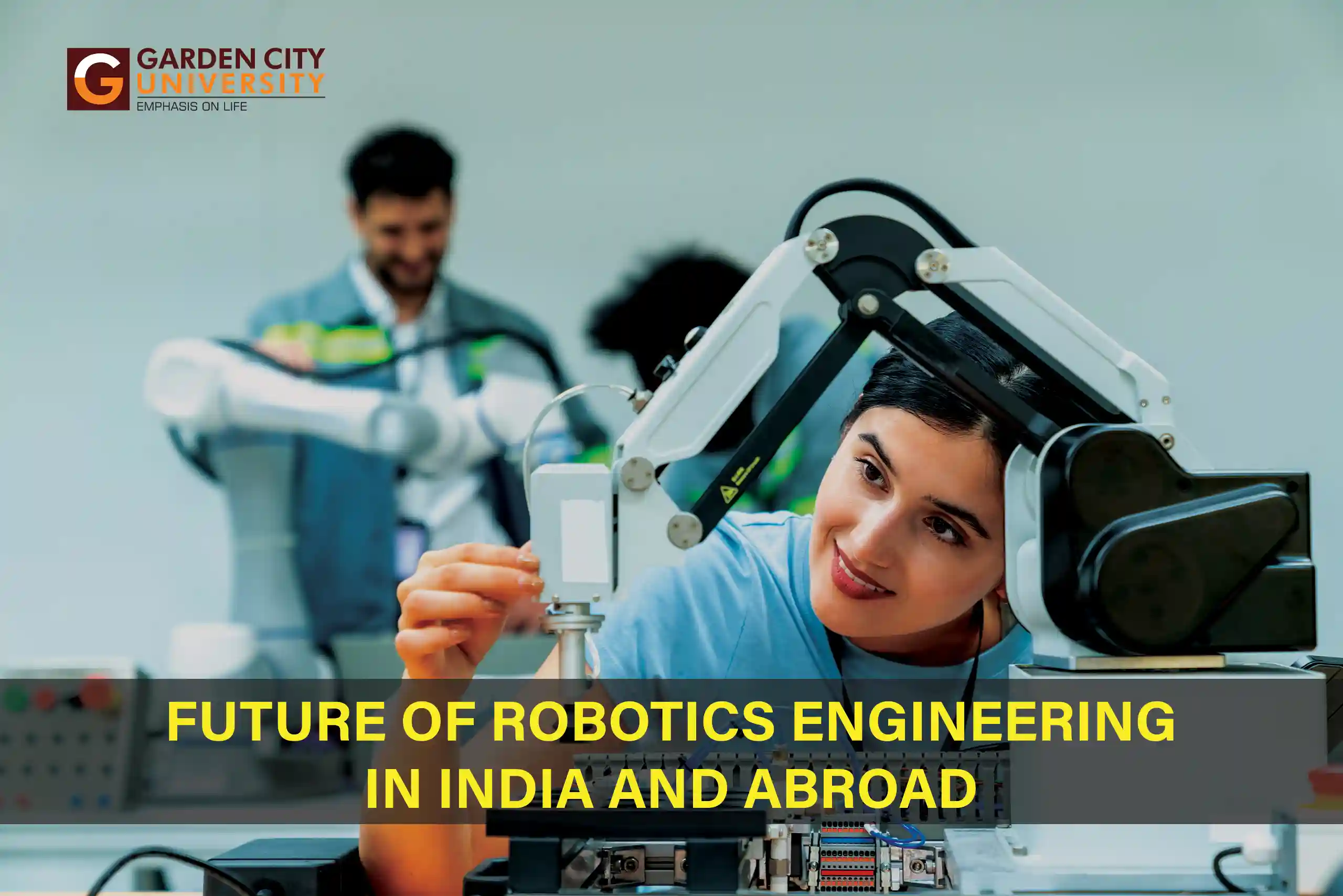
Future of Robotics Engineering in India and Abroad

The future of robotics engineering is very promising both in India and abroad, with rapid technological advancements, growing industry adoption, and expanding career opportunities. India is emerging as a significant player in robotics, supported by government initiatives, increasing automation use, and expanding startup ecosystems. Globally, countries like the USA, Germany, Japan, and South Korea lead in robotics innovation, providing students and professionals with high-end research facilities and diverse career paths. The Bachelor of Technology (B.Tech) in Robotic Engineering at Garden City University Bangalore offers a comprehensive, industry-driven curriculum to prepare students for this vibrant field. The Future of Robotics Engineering in India India is witnessing steady growth in the robotics engineering sector fueled by the increased adoption of automation technologies across industries including manufacturing, healthcare, agriculture, and logistics. Currently, automation usage in Indian workplaces is about 14% and is expected to rise significantly in the coming years. Robotics is finding scope in intelligent systems, artificial intelligence (AI) integration, and process optimization. Licensed private organizations, intelligence agencies, and industries are investing heavily in robotics technology to improve efficiency, precision, and safety. The Indian government’s “Make in India” campaign and digitalization initiatives strongly support robotics development. While challenges like the shortage of skilled manpower and regulatory frameworks exist, the growing startup culture and research institutions are helping overcome these. Robotics engineers in India can expect rewarding career prospects with attractive salaries and opportunities in various sectors like space research, entertainment, medicine, and banking. Global Trends in Robotics Engineering Abroad, robotics engineering is advancing rapidly with integration of AI, machine learning, and the Internet of Things (IoT). Robots today are becoming more autonomous, intelligent, and capable of performing complex tasks in fields such as healthcare, transportation, agriculture, and manufacturing. Countries such as the USA, Germany, Japan, South Korea, Canada, and the UK have leading universities and research centers offering cutting-edge robotics education and exposure to state-of-the-art labs and technology. Studying robotics abroad also provides multicultural experiences, networking opportunities, and high employability in the global job market. Collaboration between academia, industries, and government bodies worldwide is driving innovation, enabling new robotic solutions for real-world problems. B.Tech in Robotic Engineering at Garden City University Bangalore Garden City University offers a robust 4-year full-time B.Tech program in Robotic Engineering designed to equip students with essential knowledge and skills. The curriculum focuses on AI, machine learning, deep learning, TensorFlow, and natural language processing along with core robotic engineering subjects. Students learn about robot kinematics, control systems, sensors, actuators, embedded systems, and robotics programming using Python, C++, and MATLAB. The program prepares graduates to design, develop and maintain robots for diverse industrial applications, making them industry-ready. The university provides modern classrooms, advanced laboratories, a well-stocked library, and a strong faculty team to support quality education. Garden City University’s emphasis on research, innovation, and industry collaboration helps students gain practical exposure and opens pathways for rewarding careers in India and abroad. Why Choose Garden City University for Robotics Engineering? Industry-aligned, comprehensive curriculum with advanced courses in AI and machine learning State-of-the-art infrastructure and laboratories for immersive learning Experienced faculty with domain expertise Strong focus on research, innovation, and entrepreneurship Excellent placement prospects in diverse sectors of robotics and automation Located in Bangalore, a major tech hub providing ample internship and job opportunities Supportive campus environment fostering holistic development FAQ What is the scope of robotics engineering in India? Robotics engineering has a vast scope with growing industry adoption in manufacturing, healthcare, agriculture, and defense sectors. Government initiatives and startups are boosting the robotics landscape. What are the key subjects in the B.Tech Robotic Engineering course at Garden City University? Key subjects include AI, machine learning, deep learning, control systems, robot kinematics, sensors and actuators, embedded systems, and robotics programming. What career opportunities are available after a Robotics Engineering degree? Graduates can work as robotics engineers, automation consultants, AI specialists, research scientists, and in roles related to manufacturing, healthcare, space tech, and defense. How is studying robotics engineering abroad different from studying in India? Studying abroad offers access to advanced research facilities, exposure to global innovation, diverse perspectives, and better networking opportunities, though India is quickly advancing its ecosystem. Why should I choose Garden City University for robotics engineering? Garden City University offers an industry-driven curriculum, modern infrastructure, experienced faculty, and located in Bangalore, it connects students to dynamic industry opportunities. Conclusion Choosing to study B.Tech in Robotic Engineering at Garden City University Bangalore is an excellent step for aspiring engineers. It prepares students thoroughly for an exciting and impactful career in India’s growing robotics industry and the international arena. This blend of quality education, industry exposure, and strong placement support makes Garden City University a recommended destination for future robotics engineers.

master's program

Top Master’s Programs with High Demand in 2026

As 2026 progresses, the pursuit of a master’s degree has become a strategic stepping stone for anyone aiming to advance their career and adapt to rapidly evolving industries. The demand for highly skilled professionals in technology, data science, healthcare, business, and emerging interdisciplinary fields has skyrocketed. Choosing the right master’s program can open doors to lucrative job opportunities, leadership roles, and meaningful contributions in various sectors. This article explores the most promising master’s programs to consider for 2026, based on global trends and industry needs. High-Demand Master’s Programs in 2026 1. Computer Science and Artificial Intelligence With technology evolving at a breakneck speed, a master’s in computer science remains a top choice. Specializations in AI, machine learning, cybersecurity, and software development are especially sought after. Graduates can take roles like software developers, AI specialists, and system architects in tech firms, finance, and consulting. 2. Data Science and Analytics As companies increasingly rely on data-driven decision-making, expertise in data science and analytics is critical. These programs teach skills in big data manipulation, statistical analysis, and predictive modeling, preparing students for careers as data scientists, business analysts, and AI engineers. 3. Healthcare and Life Sciences The healthcare industry is expanding rapidly, with a growing need for professionals in specialized nursing, biotechnology, pharmaceuticals, and health management. Master’s degrees in nursing, biotechnology, and public health offer roles such as nurse practitioners, clinical researchers, and healthcare administrators. 4. Business and Management Master’s in business administration (MBA) with specializations like digital transformation, entrepreneurship, and supply chain management remain highly popular. These programs cultivate leadership, strategic thinking, and innovation skills, creating pathways to managerial positions and consultancy roles. 5. Media Studies and Communication Master’s degrees in Media Studies prepare students for careers in digital media, journalism, advertising, and public relations. These programs focus on communication strategies, media production, digital storytelling, and media management. Graduates gain skills to analyze media trends and create impactful content across multiple platforms, making them valuable in today’s fast-changing media landscape. 6. Interdisciplinary and Emerging Programs Fields like computational linguistics, environmental sustainability, and forensic science are gaining traction. These interdisciplinary programs blend technology and humanities or social sciences, addressing complex modern challenges in innovative ways. Factors Driving Demand for These Programs Technological Advancements: Rapid growth in AI, machine learning, and big data analytics. Global Health Challenges: Increased focus on healthcare innovation post-pandemic. Business Industry Shift: Digital transformation requiring new management competencies. Sustainability and Ethics: Rising importance of environmental sciences and ethical AI. Global Job Market: Increased international mobility and cross-cultural collaboration. Top Career Paths for Master’s Graduates in 2026 AI Engineer, Data Scientist, Software Developer Nurse Practitioner, Clinical Researcher, Health Administrator Business Strategist, Entrepreneur, Supply Chain Manager Financial Analyst, Investment Banker, Economist Environmental Consultant, Forensic Scientist, Computational Linguist FAQ Which master’s programs are most future-proof in 2025? Programs in AI, data science, healthcare, and digital business are expected to remain highly relevant for the foreseeable future. How do I choose the best master’s degree for my career goals? Consider your passions, industry trends, earning potential, and the geographic demand for skills. Are interdisciplinary programs valuable? Yes, they prepare students to tackle complex, real-world problems across multiple fields, enhancing versatility. Can I pursue master’s degrees online or part-time? Many universities offer flexible learning options, but ensure the program offers practical exposure and quality faculty. What role does the university’s reputation play? A university with strong industry connections, experienced faculty, and good placement support can significantly impact career outcomes. Why Pursue Your Master’s Degree at Garden City University, Bangalore? After exploring the high-demand master’s programs available globally, students should consider the outstanding opportunities at Garden City University (GCU) in Bangalore. GCU offers cutting-edge postgraduate programs in Biotechnology, Microbiology, Forensic Science, Data Science, Computational Linguistics, Psychology, and more, designed to meet industry demands of 2025. With expert faculty, modern labs, industry collaborations, and rich academic resources, GCU stands out as a premier destination for building a future-ready career. Students at GCU not only gain strong theoretical knowledge but also practical skills necessary to excel in fast-growing sectors. Choosing Garden City University ensures access to quality education in a conducive environment in Bangalore, India’s expanding education hub. It’s an excellent choice for aspirants seeking specialized master’s programs aligned with market trends

Any Queries

Please fill the below form and our representative will get in touch with you at the earliest

Copyright © Garden City University | Developed by Pathway Productions