
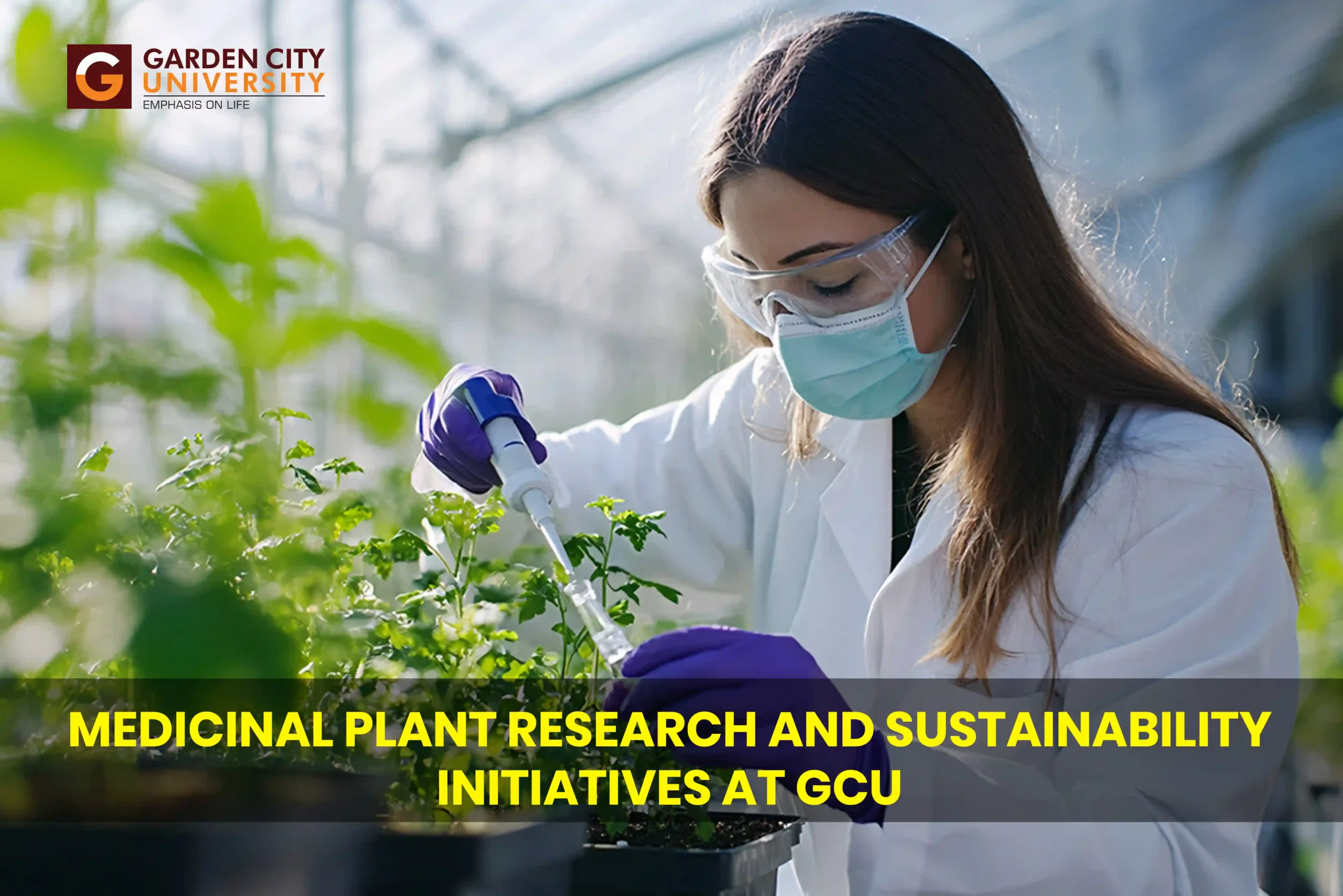
Entering the higher education landscape in 2026 feels remarkably different than it did even a few years ago. Most students quickly realize that a degree alone is no longer a golden ticket; instead, recruiters are hunting for “Day Zero Professionals” who can deliver value from their very first hour. At the forefront of this shift, Medicinal Plant Research at Garden City University provides the hands-on training required to bridge the gap between classroom theory and high-tech lab reality.
In the heart of Bengaluru’s research corridor, the Medicinal Plant Research and Sustainability Initiatives at GCU are designed to solve this exact problem. By following the “Learn It. Do It. Live It.” philosophy, the university has turned the traditional curriculum into a professional training ground for the next generation of scientists.
Table of Contents
ToggleThe 2026 Shift: Why Medicinal Plant Research Trumps “Studying”
Most education systems feel like watching a movie about swimming rather than jumping into the pool. Medicinal Plant Research at Garden City University flips this. By treating the Hoskote campus as a “Living Laboratory,” the university moves science out of dusty journals and into the soil.
Whether you are an aspiring biotechnologist or an environmental scientist, the focus is on mastering the “Applied Spectrum”—the space where a scientific idea becomes a marketable solution.
1. High-Value Skill Acquisition in Medicinal Plant Research
To rank for high-paying roles in the 2026 biotech market, you need specialized skills that cannot be automated. GCU focuses on “Niche Innovations” that most standard colleges overlook:
- In-Vitro Propagation Mastery: Students work in dedicated labs for Orchid and Vanilla cultivation. Learning tissue culture isn’t just a lab exercise; it’s a high-demand skill for the international export and pharmaceutical sectors.
- Microgreens Systems: Understanding the environmental controls and quality checks for superfoods is a direct entry point into the booming Agri-Tech startup sector.
- Waste-to-Wealth Engineering: Learning to turn campus organic waste into high-value bio-fertilizers prepares you for a career in Sustainability Consulting and circular economy management.
2. National Impact: Medicinal Plant Research and Sustainability
One of the strongest pillars of Medicinal Plant Research and Sustainability Initiatives at GCU is its direct link to national missions.
Under the mentorship of industry veterans like Dr. Madhu Malleshappa, students lead the Ashwagandha National Campaign in association with the Ministry of Ayush. This isn’t a mock project; it involves:
- Standardizing sustainable cultivation protocols for medicinal plants.
- Analyzing the chemical profile of crops like Shatavari for pharmaceutical-grade quality.
- Seeing the full “Translational” spectrum—witnessing how a plant in a Hoskote greenhouse becomes a certified healthcare product.
3. The Hoskote Campus: A Bengaluru-Specific Eco-Research Hub
The 10-acre Miyawaki forest at the GCU Hoskote campus is one of the few urban afforestation projects of its size in a university setting.
- For Life Science students: It’s a real-time laboratory for carbon sequestration and soil health.
- For Sustainability leads: It’s a case study in how to build a breathing, self-sustaining ecosystem in a rapidly urbanizing city like Bengaluru.
4. Building a “Founder Mentality” Through Club Mela
Innovation at GCU isn’t limited to the science labs. Through the Club Mela, the university operates on an event-based funding model that mimics the real-world startup ecosystem. When you lead a culinary demonstration or a technical workshop, you’re practicing project management, accountability, and resource allocation—the exact traits that recruiters at firms like KPMG, Deloitte, and Goldman Sachs hunt for in freshers.
FAQ
Typically, students who have completed 10+2 with a focus on science (PCB/M) are eligible. GCU prioritizes candidates who show a “hands-on” aptitude for field research and lab work over simple rote memorization.
Yes. Major research campaigns at GCU, particularly those involving medicinal plants, are supported by national bodies like the Ministry of Ayush, giving your portfolio national credibility.
Graduates from the School of Sciences are regularly recruited by top-tier firms in the pharmaceutical, agri-tech, and sustainability sectors. The practical experience with orchids and microgreens often leads to roles in high-value niche companies.
Absolutely. The GCU Incubation Centre and IPR Cell provide the logistical and legal support required for students to turn their research findings into registered commercial ventures.
Conclusion
In 2026, a marksheet is just a ticket to enter the room; your projects are what help you keep your seat. The focus on Medicinal Plant Research and Sustainability Initiatives at GCU ensures that you don’t just “graduate”—you “launch.”
By mixing traditional plant wisdom with modern analytical science, GCU prepares you to be a specialist who can look at a global challenge and find a local, sustainable solution. If you’re ready to trade the PowerPoint for the greenhouse, exploring the programs at Garden City University is the most strategic career move you can make today.
Atchaya S
Atchaya S is a content writer specializing in creating informative and engaging blog content on education, student life, and academic programs. With a keen eye for detail and a passion for storytelling, she focuses on delivering valuable insights that help students make informed decisions about their educational journey.