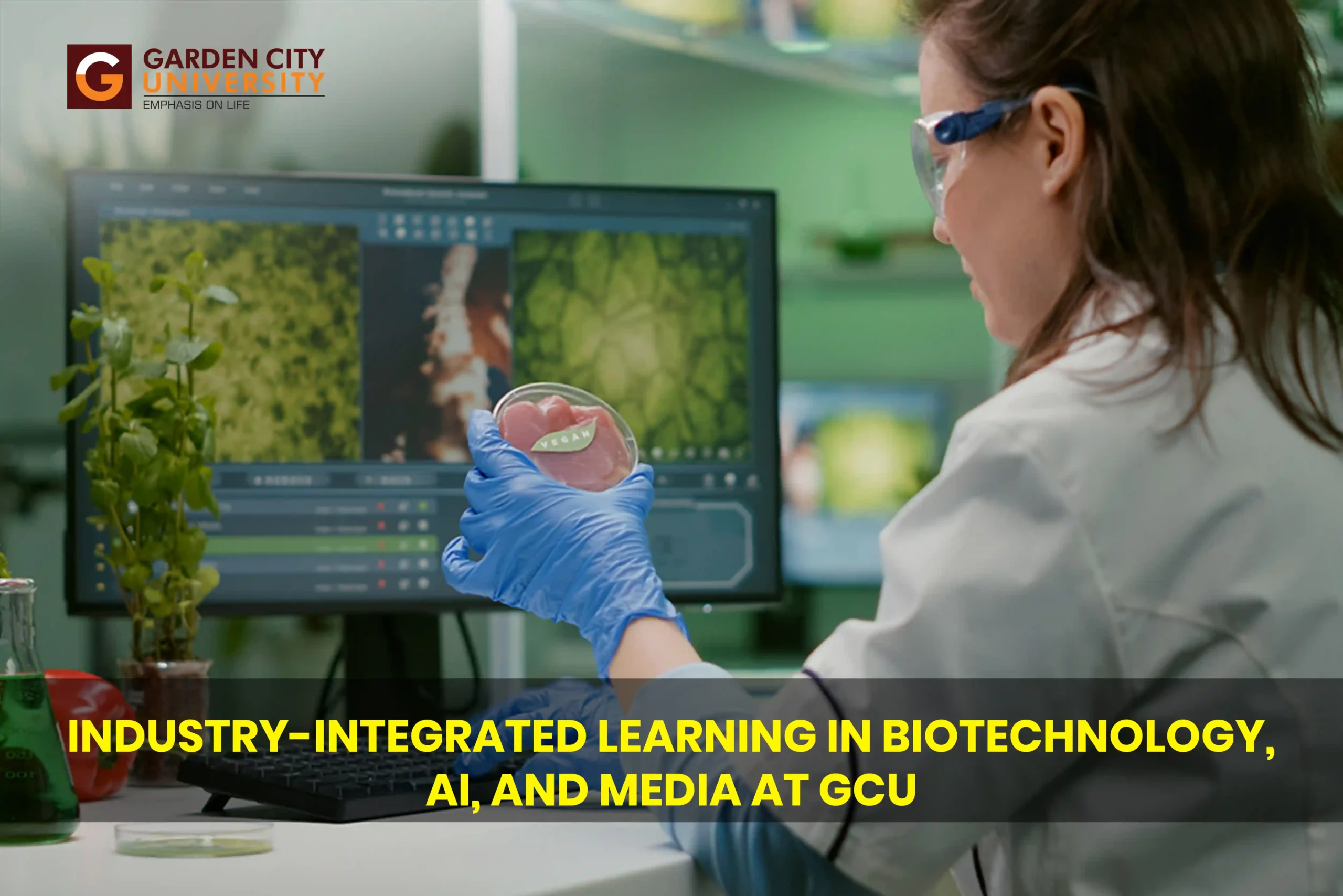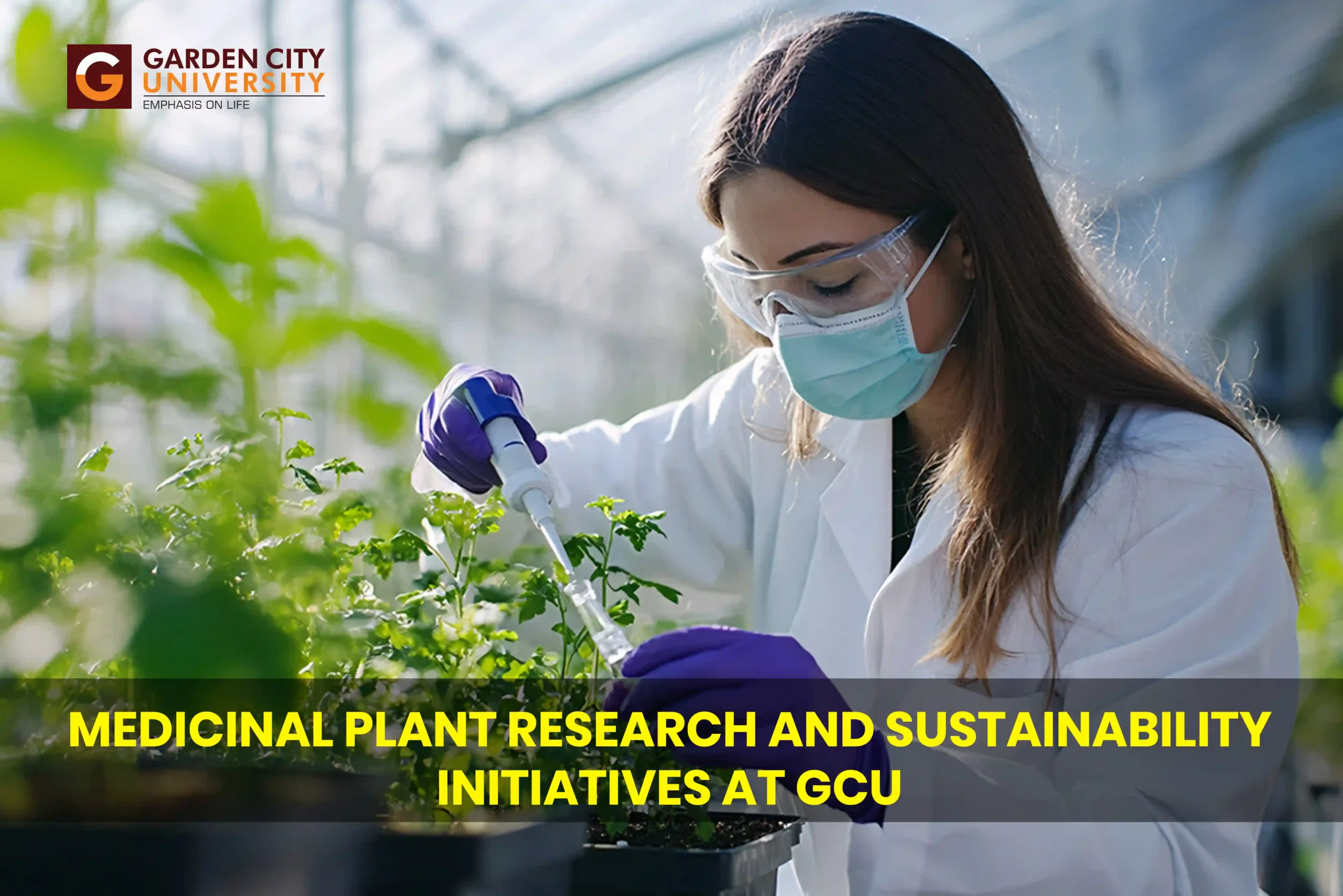
If you’re a student in Bengaluru, you’ve likely heard the same pitch a thousand times: “We offer industry-ready education.” However, the reality is often different once you walk into a classroom and spend three years staring at a whiteboard. In the fast-moving sectors of Biotech, AI, and Media, that whiteboard simply doesn’t exist. Consequently, Industry-Integrated Learning has become the only way to ensure you are either solving a problem on a lab bench or not falling behind. This is why Industry-Integrated Learning in Biotechnology, AI, and Media at GCU is built differently. We’ve replaced the static syllabus with a “Living Laboratory” model. Here, your “desk” is a high-tech station, a climate-controlled greenhouse, or an active incubation zone. You aren’t “practicing” for a job; you’re doing the work of a professional from day one. 1. Industry-Integrated Learning: Turning Science into Products In Biotechnology, a “successful experiment” isn’t just a result in a notebook—it’s a product that works in the market. At GCU, we focus on the Full Translational Spectrum. This means students are responsible for the entire lifecycle of a project. Instead of just reading about botanical extracts, you are: Writing the Playbook: Creating cultivation protocols that actually pass international pharmaceutical export audits. Testing the Quality: Running the chemical analysis that determines if a crop is “medical-grade” or just biomass. Closing the Loop: Mapping how a botanical discovery in our Hoskote greenhouses actually reaches a pharmacy shelf. This is the difference between being a student and being a specialist. 2. Industry-Integrated Learning in Computational Science & AI In the School of Computational Science, we’ve moved beyond basic coding. The industry-integrated approach here is about Validated Technical Mastery. We don’t just teach you how to use AI; we teach you how to build it to solve industrial bottlenecks. Conversational AI & NLP: You won’t just build a simple chatbot. Students work on Natural Language Processing (NLP) projects—like automated enquiry systems or sentiment analysis tools for brand monitoring. Deep Learning & Neural Networks: You’ll spend your time in labs using tools like TensorFlow and Jupyter Notebooks, building predictive models for everything from stock prices to disease detection. Prompt Engineering: In 2026, knowing how to talk to AI is a core skill. Our curriculum includes dedicated modules on Generative AI, ensuring you can leverage these tools to speed up industrial workflows. 3. Media 2.0: The AVGC-XR Ecosystem The School of Media Studies at GCU doesn’t just produce journalists; it produces Media Technologists. Through our collaboration with industry bodies and visits to major tech events, students are immersed in the AVGC-XR (Animation, Visual Effects, Gaming, Comics, and Extended Reality) ecosystem. AI in Content Creation: You’ll learn how to use AI for automated video restoration, smart editing, and visual effects (VFX) compositing. XR & Immersive Storytelling: We don’t just teach you how to write a script; we teach you how to build an immersive world using Extended Reality (XR) tools. Campus Media Platforms: You get hands-on experience by running Campus TV and Radio. These aren’t simulations; they are active platforms where you apply AI-driven analytics to track audience engagement. 4. Industry-Integrated Learning and Niche Technical Skills Generic degrees are everywhere. Specialized, technical hands-on skills are rare. We focus on the high-value niches that Bengaluru’s biotech corridor is starving for: The Orchid & Vanilla Lab: You’ll spend your time in tissue culture and in-vitro labs, learning the precise art of cloning these high-value crops. This is a technical skill set that companies in the export and pharma sectors pay a premium for. Climate-Controlled Microgreens: This isn’t just gardening; it’s environmental engineering. You’ll manage the sensors, lighting, and quality checks required for commercial “superfood” production. Waste-to-Wealth Systems: You will work on recomposting and urban afforestation projects (like our 10-acre Miyawaki forest) to learn how to turn organic waste into industrial value. 5. The “Club Mela” Incubation Zone We’ve moved past the idea of college clubs being “hobbies.” At GCU, the Club Mela operates on an event-based funding model, which is a direct mirror of how the startup world works. If you lead a club activity, you’re the CEO of that project. You handle the innovation, the logistics, and the budget. You’re accountable for the results. This builds the leadership “muscle” that firms like Deloitte, KPMG, and Goldman Sachs look for. They don’t want people who follow instructions; they want people who can run a project. FAQ 1. How does this actually help me get a job? Most freshers start with a blank resume. You’ll start with a portfolio. When you can tell an interviewer, “I managed a tissue culture lab” or “I ran an AI-driven media campaign,” you’ve already proven you can do the job. 2. What kind of tech will I be using? You’ll have access to specialized tissue culture labs, high-tech greenhouses, microgreens centers, and advanced computational labs for AI data modeling using Python, TensorFlow, and R-Programming. 3. Is this only for Science students? No. Whether you’re in Media or AI, the model is the same: you work on live projects. Media students document the forest research; AI students model the growth data. Everyone works in a cross-functional team. 4. Can I start my own business here? Yes. Our incubation culture is designed to take a lab project and turn it into a commercial solution. We provide the mentorship and the infrastructure; you provide the drive. Conclusion The job market doesn’t care what you can memorize; it cares what you can fix. The commitment to Industry-Integrated Learning in Biotechnology, AI, and Media at GCU is about making sure you never feel like an amateur. By the time you finish your course, you’ll have developed the professional intuition that only comes from repeated, real-world experience. If you’re ready to stop reading about your industry and actually start working in it, securing your spot in one of the specialized tracks at Garden City University is the most practical first step you can take toward your career.