
The traditional classroom is undergoing a radical upgrade. In 2026, the question isn’t just “What degree do you have?” but “What problem have you solved?” Most students are tired of memorizing slides just to pass an exam, only to realize the industry has moved on without them. Research-Driven Education and Innovation at Garden City University has built an ecosystem where students operate at the intersection of industry, ethics, and high-tech experimentation. By following the philosophy of “Learn It. Do It. Live It,” GCU ensures science is deeply connected to the world outside the classroom.
Table of Contents
ToggleWhat is Research-Driven Education and Innovation?
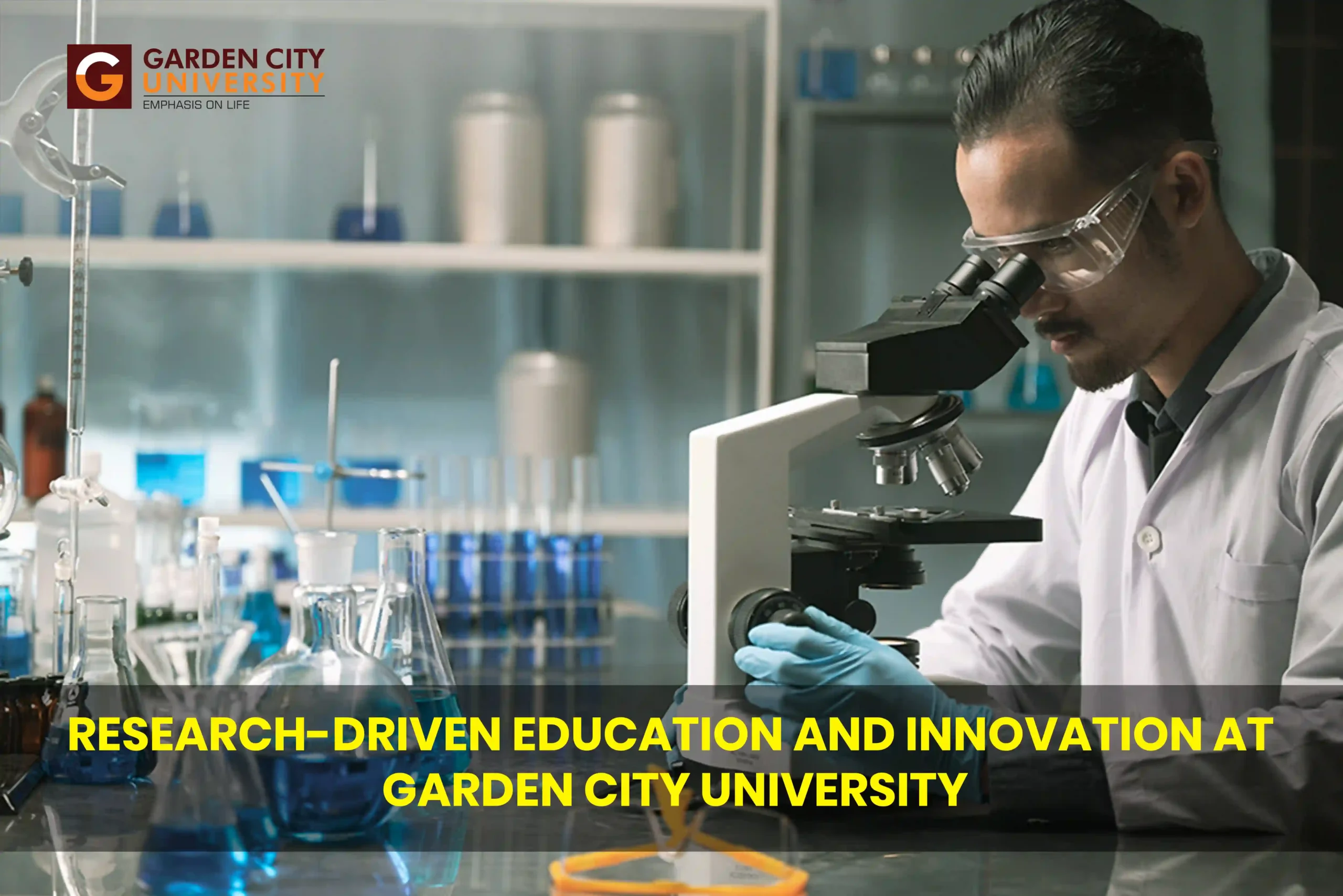
At its core, this model ensures that learning happens in laboratories, fields, greenhouses, and live research environments rather than just at desks. It is a modern way of teaching that treats the student as a researcher from day one. At Garden City University, this means your curriculum is alive. Consequently, you aren’t just reading about a plant; instead, you are cultivating it, analyzing its chemical properties, and understanding its market value.
1. Research-Driven Education and Innovation Beyond the Lab
At many universities, “innovation” is just a fancy word on a brochure. However, at GCU, it’s something you can actually see, smell, and grow. One of the most exciting examples is the Ashwagandha National Campaign, which is a high-stakes project backed by the Ministry of Ayush.
Instead of just sitting in a lecture hall, you’re out in the field under the guidance of experts like Dr. Madhu Malleshappa. Because of this, you aren’t just a student; you’re a key player in a national mission. This involvement means getting your hands dirty with sustainable farming and testing chemical standards. Ultimately, you are taking a theory from a textbook and turning it into a real healthcare product.
2. The “Living Laboratory” as a Hub for Innovation
Imagine studying biodiversity while standing in a 10-acre Miyawaki forest. At the GCU Hoskote campus, this forest isn’t just for scenery; rather, it’s a massive research site. Students study ecology and sustainability in a real, breathing ecosystem. Furthermore, it is much harder to forget a lesson when you’ve physically walked through it.
Beyond the forest, the Research-Driven Education and Innovation continues with:
Orchid and Vanilla Gardens: Students master tissue culture and in-vitro propagation.
Microgreens Technology: You learn the environmental controls required to grow “superfoods” at scale.
Waste-to-Wealth: From recomposting to urban afforestation, you are learning the engineering behind a greener future.
3. Beyond Science: Startup and Club Culture Innovation
Innovation at Garden City University also extends to how students spend their free time. For instance, the “Club Mela” is a dynamic talent showcase that serves as an incubator for skills.
Whether it is through culinary demonstrations or skill-based workshops, the university encourages an event-based model. When you participate in these clubs, you learn logistics, innovation, and leadership. These are the exact “soft skills” that recruiters at firms like Deloitte and KPMG look for in 2026.
4. How Research-Driven Education and Innovation Gets You Hired
Why does this research-heavy approach matter for your future? Because recruiters are looking for “Validated Expertise.”
The Portfolio Advantage: You don’t graduate with just a marksheet; you graduate with a portfolio of projects backed by the Ministry of Ayush.
The Salary Factor: Because GCU graduates don’t need basic “hand-holding,” they often land better roles. You enter the workforce as a specialist who knows how to deliver results.
FAQ
It gives you a real story to tell. When you can explain how you managed a national medicinal plant campaign or worked in a tissue culture lab, you demonstrate a level of maturity that catches an employer’s eye.
Yes. Many initiatives, especially in the Life Sciences department, are funded and supported by national bodies like the Ministry of Ayush.
You will have access to high-tech greenhouses, specialized orchid gardens, microgreens centers, and the 10-acre Miyawaki forest research site.
Absolutely. The curriculum at GCU is designed to get students involved in applied biotechnology and field research from their very first year.
Conclusion
The world has enough graduates who are good at memorizing slides. What it needs are innovators who can look at a problem and fix it. The commitment to Research-Driven Education and Innovation at Garden City University is all about making sure you never feel “unprepared” for the real world.
By mixing traditional wisdom with modern, hands-on science, GCU helps you build a career that actually means something. If you’re ready to see what science looks like when it’s not stuck in a textbook, exploring the diverse programs at Garden City University is the best first step you can take.
Atchaya S
Atchaya S is a content writer specializing in creating informative and engaging blog content on education, student life, and academic programs. With a keen eye for detail and a passion for storytelling, she focuses on delivering valuable insights that help students make informed decisions about their educational journey.