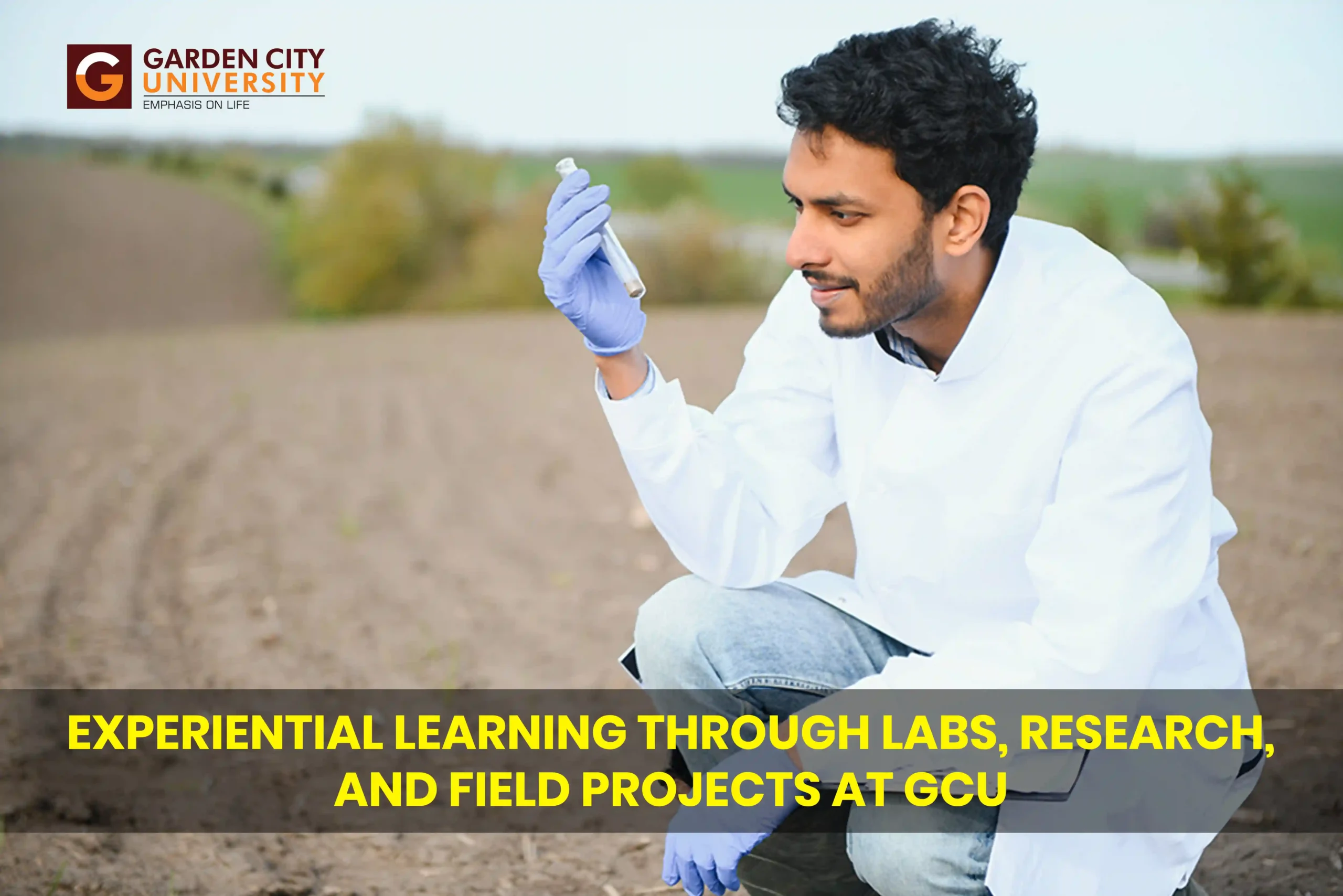
If you’ve spent any time looking at job descriptions in Bengaluru lately, you’ll notice a pattern. Companies aren’t just looking for someone with a high GPA; instead, they are hunting for candidates with Experiential Learning backgrounds. The “fresher” tag is becoming a hurdle, and the only way to clear it is to show you’ve already done the work. This is exactly why Experiential Learning through labs, research, and field projects at GCU isn’t just a fancy addition to the syllabus—it’s the core of how we operate. We’ve moved away from the “lecture-and-forget” model because you don’t learn how to clone an orchid by reading a PDF. Consequently, you learn it by doing it, failing, and trying again until it works. Breaking the “Classroom” Wall: Why Experiential Learning Matters In most colleges, you spend three years reading about a process before you ever touch the equipment. At GCU, we flip that timeline. We don’t see “learning” as a passive act of sitting in a chair; we see it as an active apprenticeship. When your “classroom” shifts from a desk to a high-tech lab bench, a climate-controlled greenhouse, or a fast-paced newsroom, the stakes change. You aren’t just studying for an exam; you are performing a professional role. This shift from being a student to being a practitioner is what defines the GCU experience. 1. Turning Science into a “Living Lab” If you’re a science student who hates staring at blackboards all day, you’ll find the Life Sciences setup here is designed to keep you on your feet. The “Translational” Science Approach: Instead of just memorizing the chemical properties of medicinal plants, our students are tasked with the entire lifecycle of botanical research. This involves: Protocol Development: Designing cultivation methods that meet international pharmaceutical standards. Quality Audits: Running the chemical analysis that determines if a crop—be it Shatavari or Ashwagandha—is medical-grade or just biomass. Industry Interaction: Seeing how a scientific discovery moves from our Hoskote campus greenhouses into a commercial healthcare product. The Tech Side of Biology: We focus on high-value technical “moats” that give our graduates an edge in the job market. You’ll master in-vitro propagation for orchids and vanilla in specialized tissue culture labs and manage the sensors and climate controls for industrial-grade microgreens. These aren’t just hobbies; they are the specific technical skills that global export and pharmaceutical firms are actively hunting for in Bengaluru. 2. Experiential Learning at the Samsung SEED Lab For the tech-savvy, GCU hosts the Samsung SEED Lab—one of only a handful in the country. This isn’t a “practice lab” where you do dummy assignments. Students here work on live AI data for Samsung’s Bixby, handling everything from emotional audio tones to complex dataset translations. What’s even better? It’s an “earn while you learn” setup. Undergraduates can pull in stipends around ₹25,000, while postgrads can hit ₹35,000. It’s a rare chance to get paid for your homework while building a resume that tech giants actually care about. 3. Why Experiential Learning Through Labs and Research Works In a job market that’s currently obsessed with “day-one readiness,” this hands-on approach is your biggest advantage. The Real Benefits: Scientific Credibility: GCU students have co-authored research in major journals like Springer Nature. That’s a huge deal when applying for masters or PhDs abroad. Entrepreneurial Muscle: The Entrepreneurship Lab doesn’t just talk about startups; it gives you the mentorship and space to build one from scratch. The Salary Jump: Students coming out of these integrated labs aren’t fighting for entry-level scraps. For instance, AI lab alumni are seeing starting pay in the ₹70,000 to ₹80,000 per month range. 4. Getting In: Admission and Eligibility GCU is looking for students who are curious, not just those who can memorize textbooks. Who can apply: Generally, if you’ve got your 10+2 (for UG) or a relevant degree (for PG), you’re in the running. They look for a science or math background for the tech and biotech streams. The Process: It starts with a counseling session where you actually talk about your goals. They want to make sure the practical pathway you choose matches the job you want later. FAQ 1. Does the practical work help with placements? Absolutely. When you can tell an interviewer how you managed a national medicinal plant campaign or handled data for Samsung, you aren’t a “fresher” anymore—you’re an experienced candidate. 2. Can I really earn a stipend while I study? Yes. Labs like the Samsung SEED Lab provide monthly stipends for students working on their projects. It’s a great way to handle your own expenses while learning. 3. Is the research recognized by the government? Yes, many projects (like the Ashwagandha campaign) are fully supported and recognized by national bodies like the Ministry of Ayush. 4. What if I want to start my own business? The Entrepreneurship Lab is specifically for that. You get the space, the mentorship, and the industry connections to turn a project into a company. Conclusion At the end of the day, a degree is just a piece of paper unless you have the skills to back it up. The focus on experiential learning through labs, research, and field projects at GCU ensures that you don’t just graduate—you evolve. By prioritizing real-world impact over rote learning, GCU helps you build a career that is both secure and exciting. If you’re ready to see what your future looks like when it’s not stuck in a textbook, it’s a great idea to check out the programs at Garden City University and see where your curiosity can take you.